Mexico City is known for its museums of all kinds, but have you ever heard of the Museum of Drugs?
The Museum of Drugs was founded in 1986 as an educational hall for military personnel and students of criminology, law, and psychology, focused on the study of drug cultivation, production, and trafficking. Over time, the seized items accumulated, and the collection grew into an extensive archive of the history of drug trafficking in Mexico.
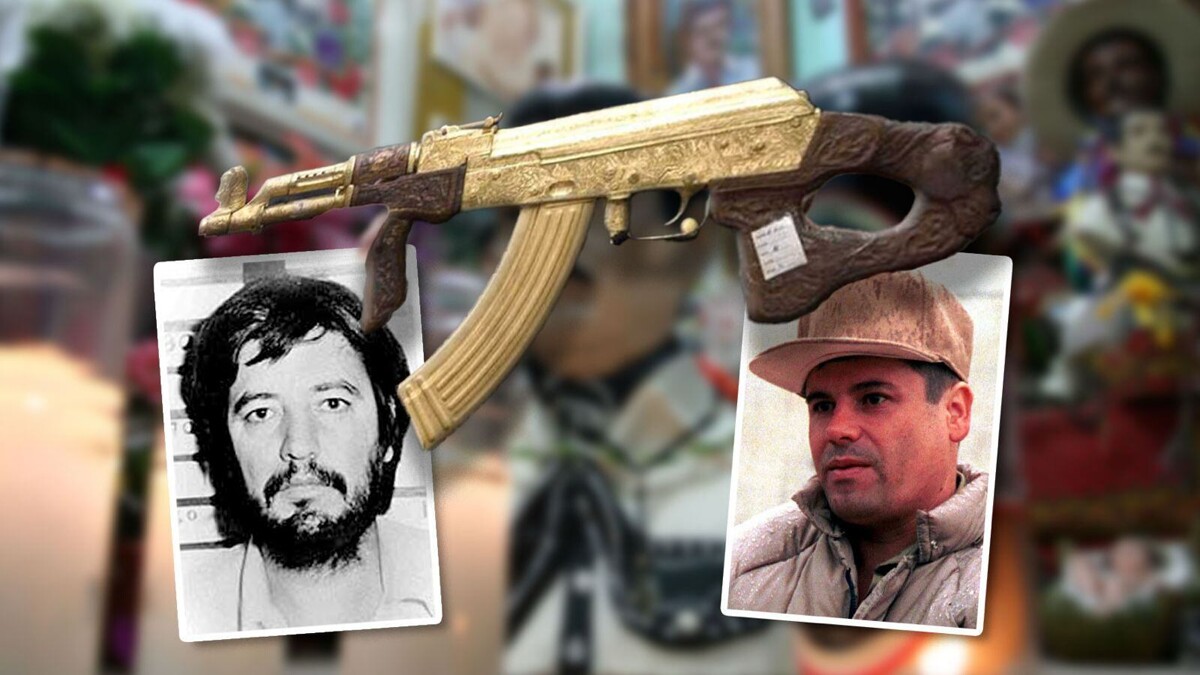
This is almost a secret place, guarded by the Secretariat of National Defense (Sedena), where gold-plated weapons, diamond-encrusted cell phones, and other oddities confiscated from drug lords over the years are exhibited.
Although its original purpose was to serve as an educational space for military and security personnel, over time it became an extensive collection of curiosities that offer a glimpse into the luxurious lives of the leaders of drug cartels in Mexico.
The bad news is that not everyone can access this space. Located in Lomas de Sotelo, in the Miguel Hidalgo borough, the Museum of Drugs is not open to the public, and very few can visit it. To date, this site has a policy of not allowing the general public to enter for security reasons.
Nevertheless, this venue receives journalists, students, cadets, officials, and even foreign military delegations.
Only those who submit a formal application, explaining the reasons for their visit, have the possibility of entering; however, it is the Sedena that is in charge of authorizing or denying the permission.
Among the museum's exhibits are other oddities from drug cartels: diamond-encrusted cell phones, saddles decorated with silver, boots made from exotic animal skins, bulletproof jackets, and dozens of weapons adorned with gold, silver, and precious stones.
One can also see paintings of the Virgin of Guadalupe that hid drug shipments, altars of Jesus Malverde, considered the patron saint of drug traffickers, and tables carved with motifs of the Holy Death.
How did the Museum of Drugs come about and why is access restricted?
The museum also houses other gold-plated weapons. In October 2013, another gold-plated Colt revolver arrived at the museum along with a diamond-encrusted Bulgari watch. Both objects belonged to Heriberto Lazcano Lazcano, 'El Lazca', leader of the Los Zetas cartel.
The weapon was engraved with the legend 'Z3', his code within the criminal organization. 'El Lazca', who had trained in the army before deserting to join Los Zetas, died on October 7, 2012, in a confrontation with the Armed Forces in Coahuila.
On display in the museum is the caliber 38 Colt automatic pistol of Joaquín 'El Chapo' Guzmán, adorned with 24-karat gold grips and embedded brilliants, a gift from his partner Amado Carrillo Fuentes, 'El Señor de los Cielos'.
The weapon has the initials A. F. engraved in relief, for Amado Fuentes, who in the 90s was the head of the Juárez Cartel and mentor to 'El Chapo', known for his alliances with Colombian cartels to traffic cocaine to the United States.
According to reports from the then Attorney General's Office (PGR), Carrillo Fuentes died in July 1997 after undergoing plastic surgery in which he sought to change his appearance.
The gift from the 'Lord of the Skies' to Chapo and other rarities: what is in the 'narc museum'?
The intervention ended in complications that cost him his life, leaving a void in the cartel and triggering internal struggles for control of its trafficking routes.
Although the Secretariat of the Navy confirmed his identity, his body was stolen from the morgue shortly after, when an armed commando snatched it from the funeral home, which raised doubts about his identification.
By 2002, it already had ten halls and hundreds of confiscated items, according to an article in El País.
It is thanks to these controlled accesses that the interior of this particular place, with more than 20 years of history, is known.
Those who wish to access must fill out an application explaining the reasons for their visit, and it will be the Sedena that authorizes or denies the permit.